 The International Conference on J.R.R. Tolkien’s Invented Languages
The conference will be held at Södertörn University in Flemingsberg south of Stockholm.
Accomodation will be at City Hostel on Flemingsgatan 19 in central Stockholm. Most meals and parts of the programme will be at the Forodrim's place on Norra Agnegatan 45, around a corner from the hostel.
We will go by train back and forth between Stockholm and Flemingsberg.
If you arrive in Stockholm by train or by bus you will come to Centralstationen (trains) or the adjacent Cityterminalen (buses). If you arrive by air it will probably be to Arlanda Airport, and you should go from there to the same central hub. You can go from the airport by bus, commuter train, regional train, long-distance train or the airport shuttle train. All the alternatives are described here.
Arlanda Express, the shuttle train, is by far the fastest and most convenient, but also by far the most expensive (640 SEK return trip, as compared to 209 SEK if you buy a bus ticket online). However, if you are able to go two or more persons on the express together the price per person lessens significantly.
In Stockholm the hostel is a short walk away from the north end of the bus terminal. In this area the streets are on two levels and the terminal is one level higher than the train station.
If you take Arlanda Express the shortest route is to exit directly to the street outside, turn left, go up a flight of stairs to a higher street (photos 1 and 2), turn to the left again and come to the end of the bus terminal at the next corner. Alternatively, if you do not wish to carry your luggage up a stair, go along the platform into the central station. Inside the entrance there is an escalator to the bus terminal immediately to the right (photos 3 and 4).
| 1. Street exit from Arlanda Express | 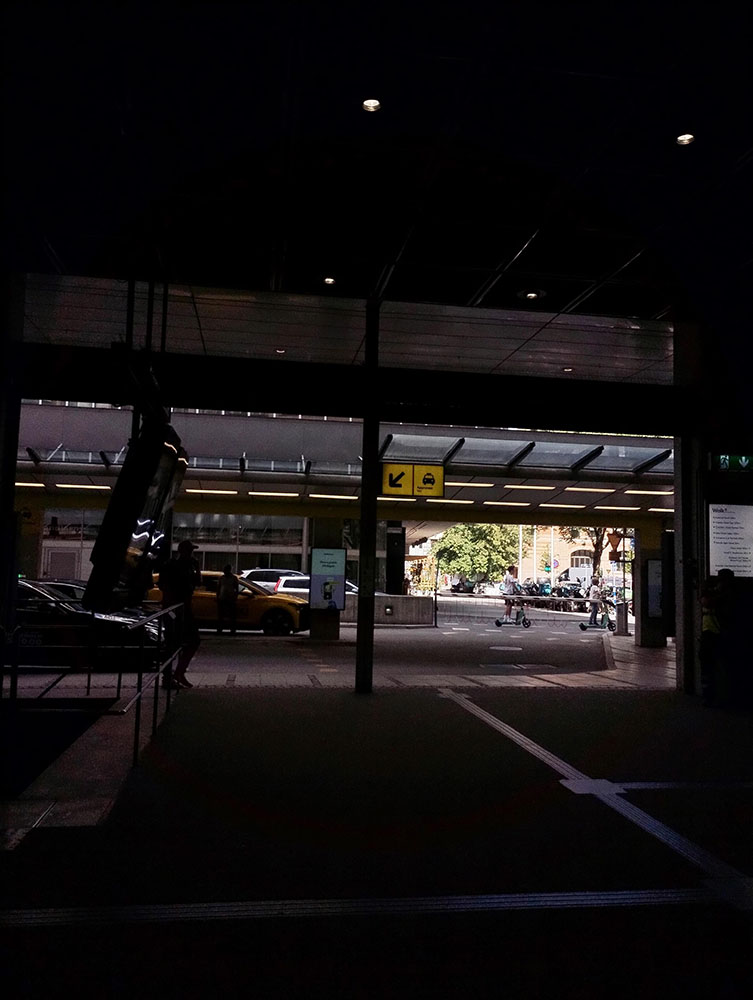 |
2. Street and stair | 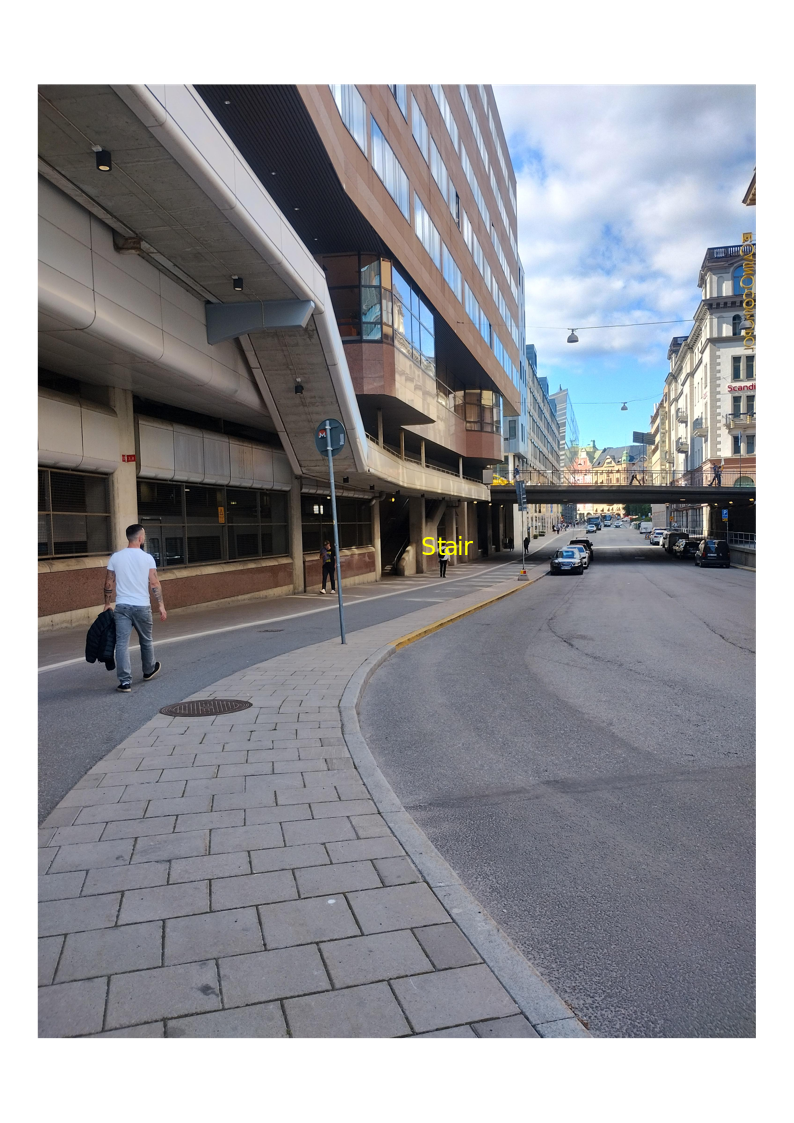 |
| 3. Entrance to central station from Arlanda Express | 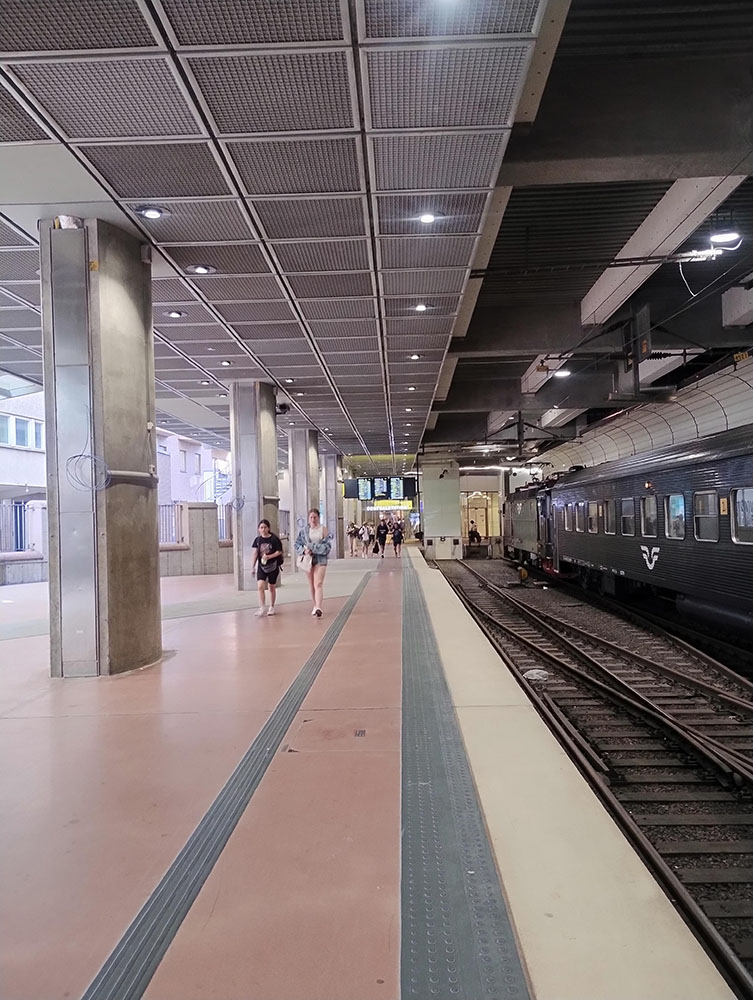 |
4. Escalator to bus terminal | 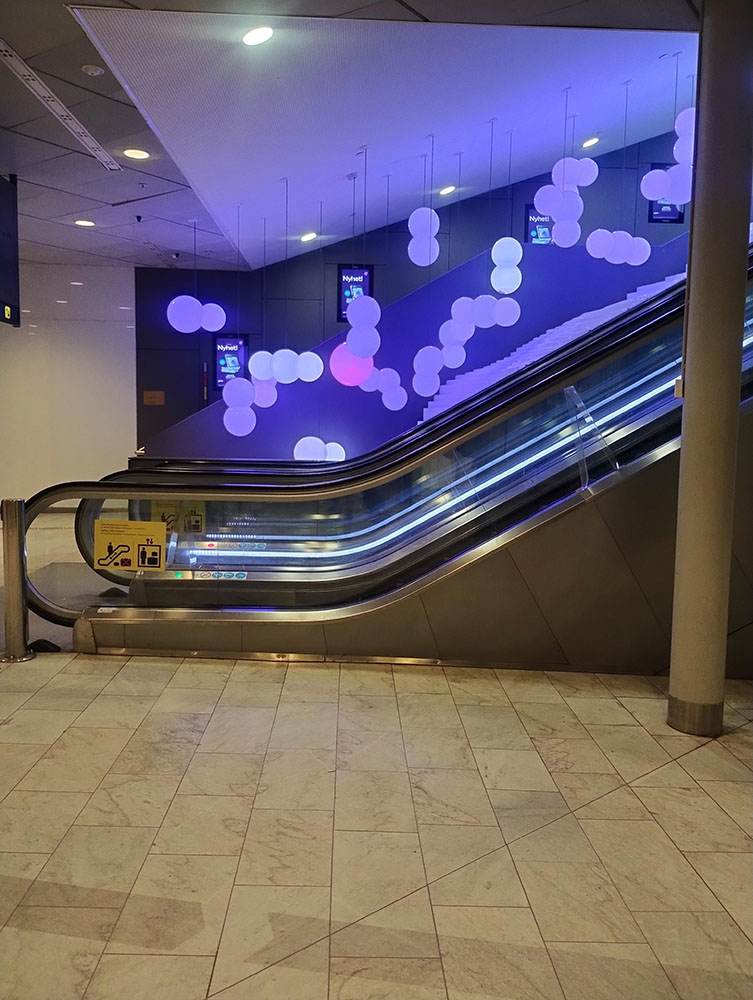 |
If you take commuter train train you arrive many levels below the streets and have to find your way up, following signboards that say "Cityterminal" or "Bus terminal" or "Bus station". If you arrive by regional or long-distance train you should follow similar signboards through the central station. In either case you will be led to the escalator mentioned above (photo 5).
| 5. Escalator to bus terminal, seen from inside the central station | 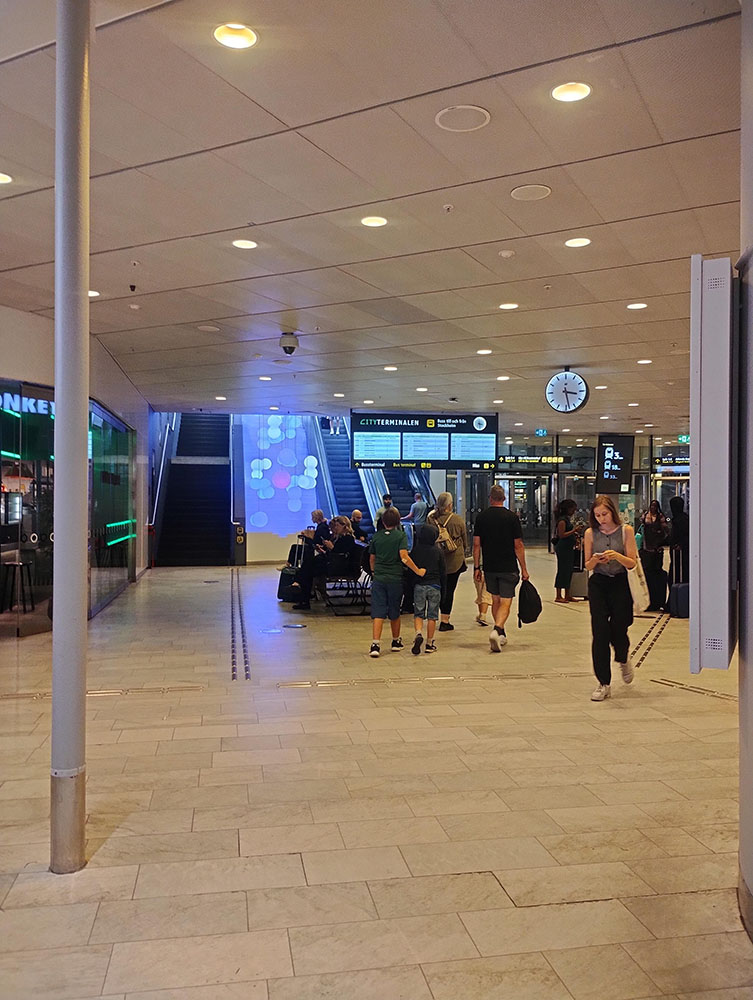 |
At the top of the escalator you enter into the bus terminal. Continue inside it along the row of bus gates until you reach the last one, which is also a regular exit door (photos 6 and 7).
| 6. Inside the bus terminal | 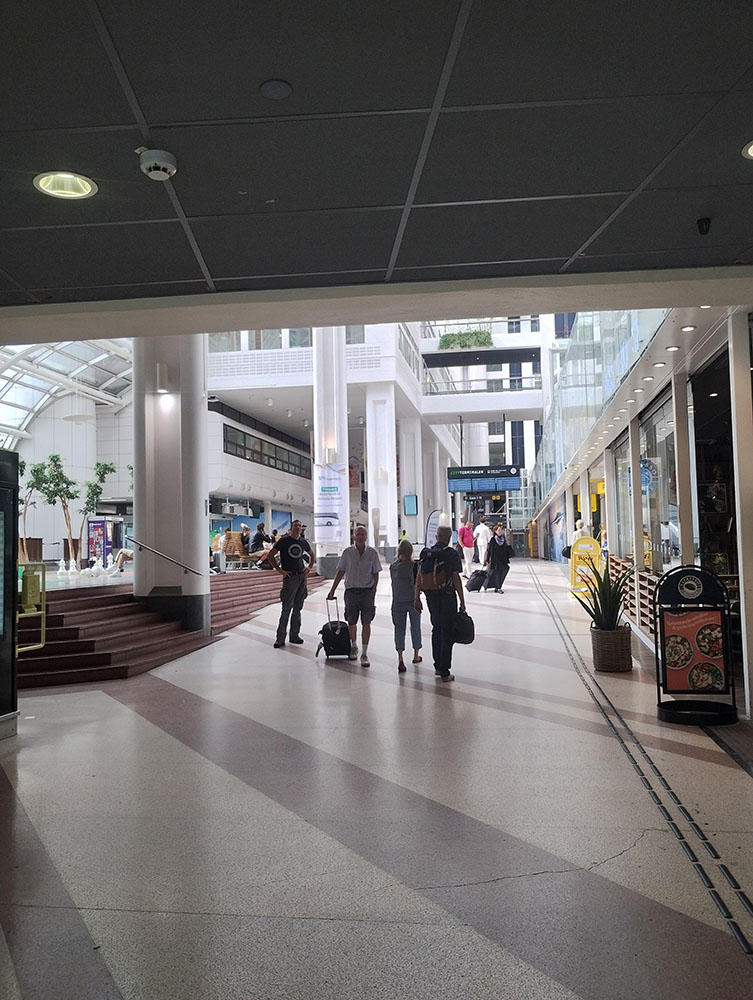 |
7. Exit from terminal building | 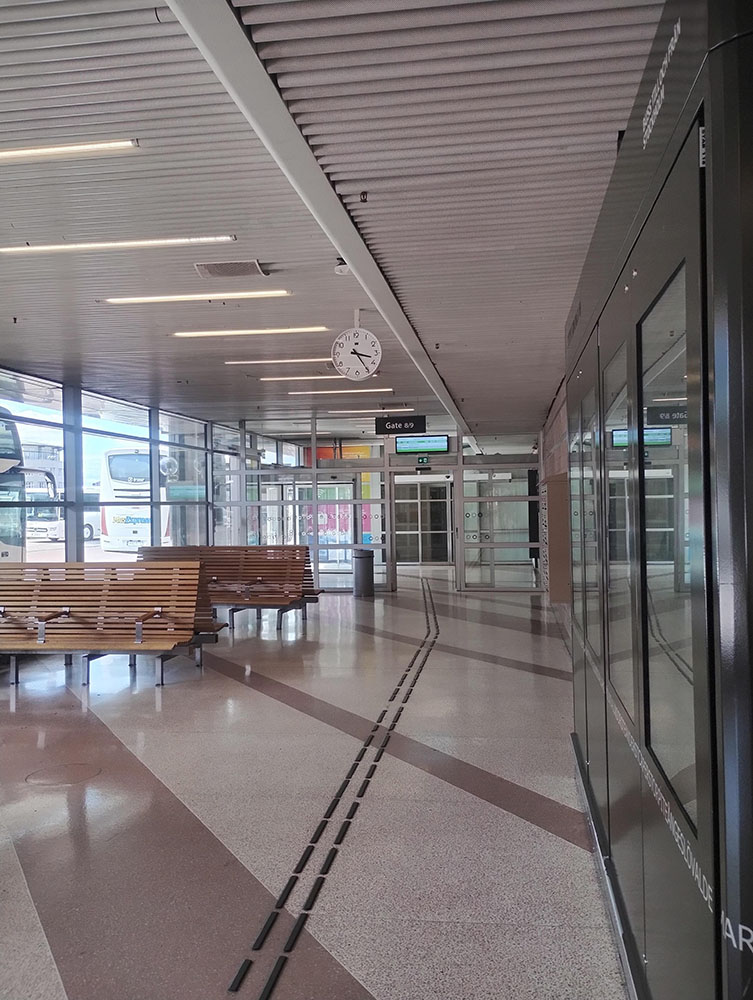 |
Outside of the building you continue to the end of the terminal, at the corner of the same street that can be reached by the stair outside the Arlanda Express street exit. This point is marked as 1 on the map below.
| Map of walk to the hostel, 1-2-3 | 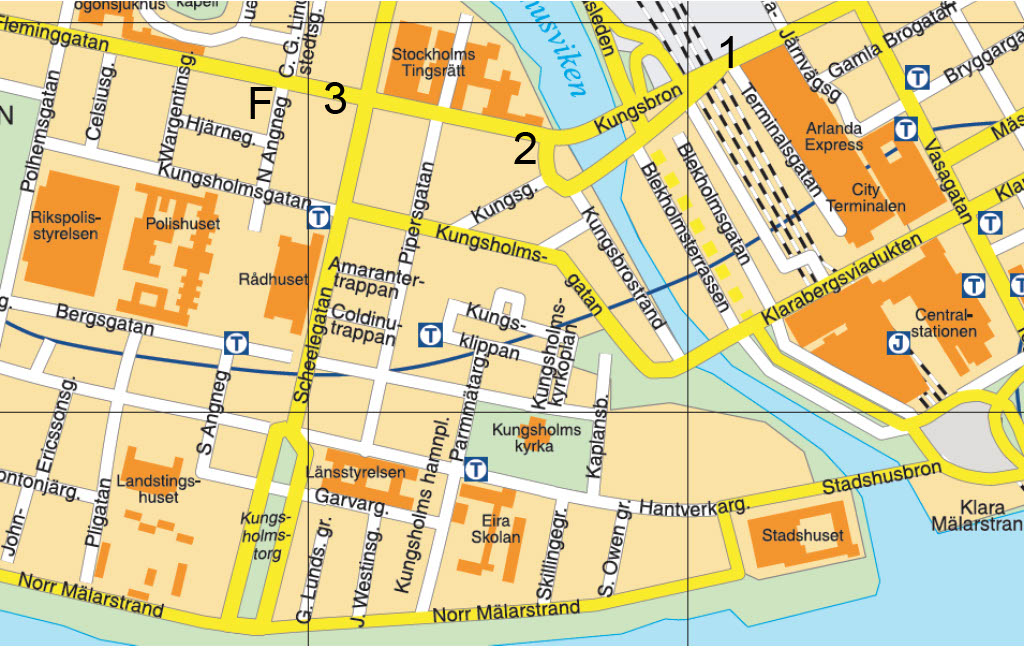 |
Coming out of the terminal area, turn right. Photo 8 shows the view before you. Ahead of you is the corner marked as 2 on the map and in the photo. Beyond it along Fleminggatan you will find City Hostel at 3 on the map. (F on the map marks the Forodrim's place.)
| 8. View from outside the bus terminal area towards Fleminggatan | 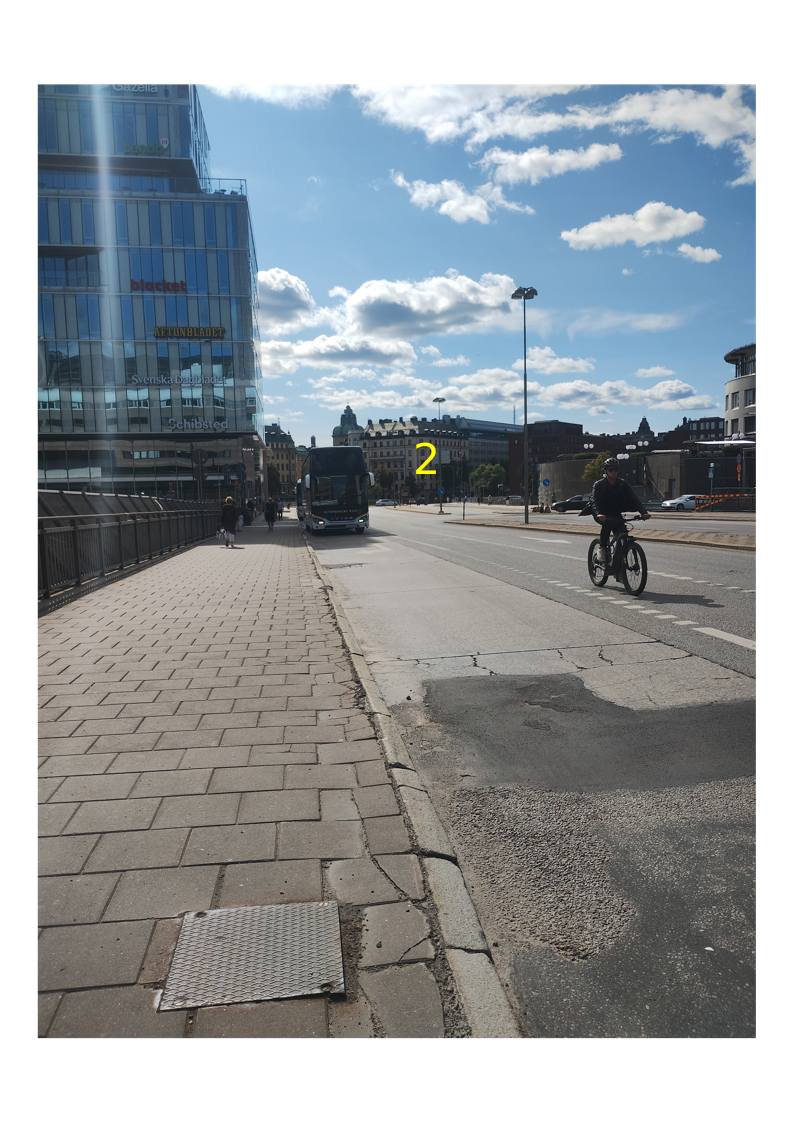 |
Most of the meals and parts of the programme will be at the Forodrim's place. Outdoor shoes are not allowed there. There are a few pairs of guest slippers, but you are advised to bring the slippers or indoor shoes that you are comfortable in.
Sweden does not use the Euro, the currency here is Swedish crowns (kronor). There are exchange offices both at Arlanda Airport and at the central station.
To plug your electrical appliances, please remember that power supply in Sweden is 230 V, 50 Hz, and the usual wall sockets in Sweden are Type F and Type C (Europlug). Please bring a transformer and/or adapter if necessary for your appliances.
If you have practical enquiries, write to: the Secretary.